
 Calendar
 I Love This Place
 Blogs
Blogs Venues
 Downtown
 Experiences
 Residents
 Shop
Shop Visitors


I love this place for a lot of reasons—some obvious, some quiet. But one of the strongest is the way this community honors its veterans. Not loudly. Not performatively. Just steadily. Even when it’s cold. Even when the crowd is small.
Veterans Day in Kingsport doesn’t need spectacle to matter. Sometimes it only needs a handful of people willing to stand outside, listen, remember, and bear witness.
This is one of those moments.
It was unusually cold on Veterans Day last year.
We’d had a long run of warm days, the kind that lull you into thinking winter might pass us by. It didn’t. Snow dusted the housetops on Monday, and by Tuesday morning—11 a.m., the eleventh day of the eleventh month—the air had turned sharp and honest. Winter had arrived without ceremony.
The turnout at the Kingsport Veterans Memorial was small. The cold saw to that. But the sky was clear, the sun bright, and there was something right about standing there anyway—bundled up with neighbors and friends, honoring those who had served, whether the crowd was large or not.
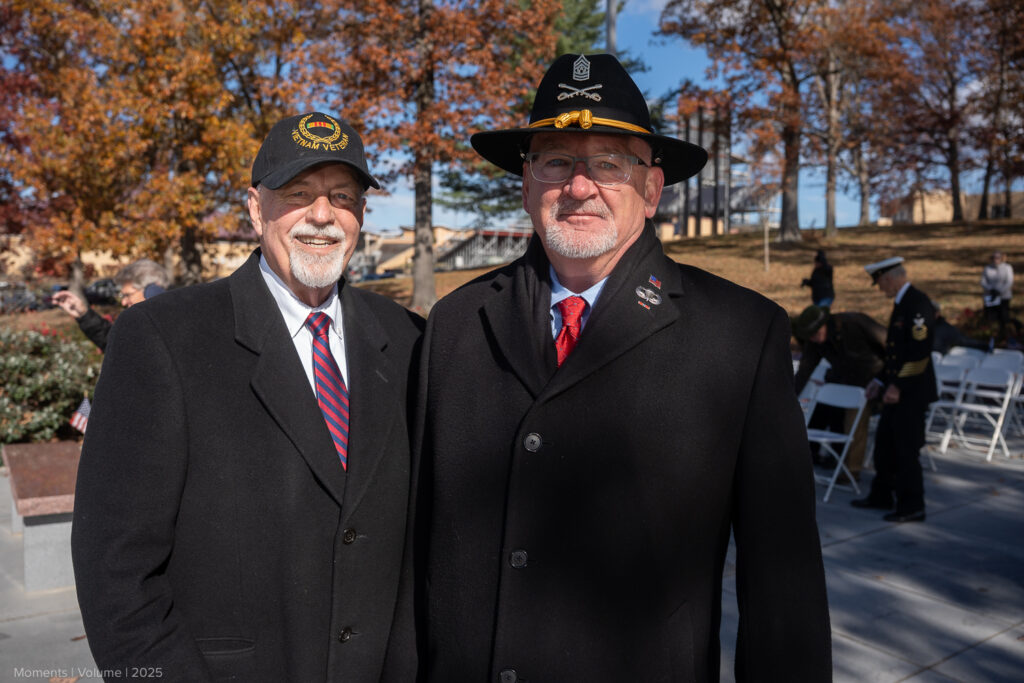
Sam Jones of Tri-Cities Military Affairs was there, as he always is. Sam volunteers his time every year to make this ceremony happen. A Vietnam veteran and lifelong advocate for his comrades, he’s steady and reliable—one of those people you come to expect, and trust, will always show up. As I shuffled through the brown leaves carpeting the ground, with a faint hint of Christmas riding the wind through the tall oaks, Sam introduced me to the day’s guest speaker, Command Sergeant Major Joe Winchester. He wore an Army hat that felt pulled from another era, something almost cavalry-like about it.
I’ve attended this ceremony enough times now that I find myself looking for familiar markers—quiet traditions that repeat year after year. The pastel blue uniforms of the Korean War veterans, usually seated in the front row. World War II veterans like Virgil Peters, now 99, who has attended faithfully for as long as he’s been able. Virgil wasn’t there this year. The cold, and his health, kept him indoors. Those absences stay with you. It’s the memories you collect that matter.
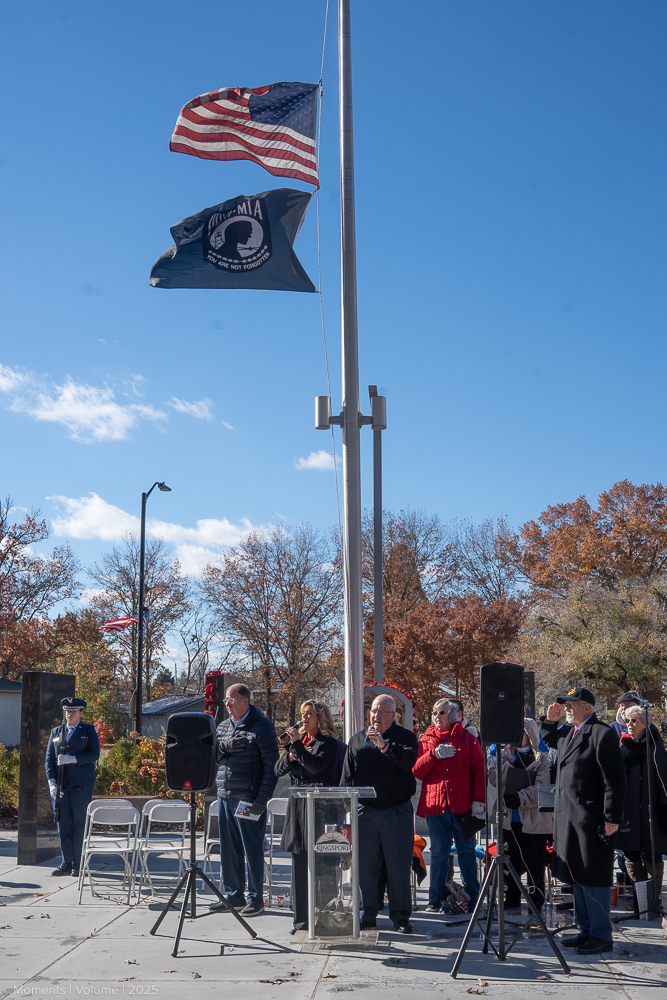
The Liberty Celebration Choir was smaller than usual, but their voices cut cleanly through the cold. Their accompanist played with mittens on, which made me smile. Not bad at all. Melissa Woods and Clark Parker sang the National Anthem, and the flag above the MIA banner snapped and clapped in time with the music as the wind threaded its way through the trees. Command Sergeant Major Winchester followed with his memorial address.
And still—despite the ceremony, the flags, the familiar faces—it was one man who stopped me cold.
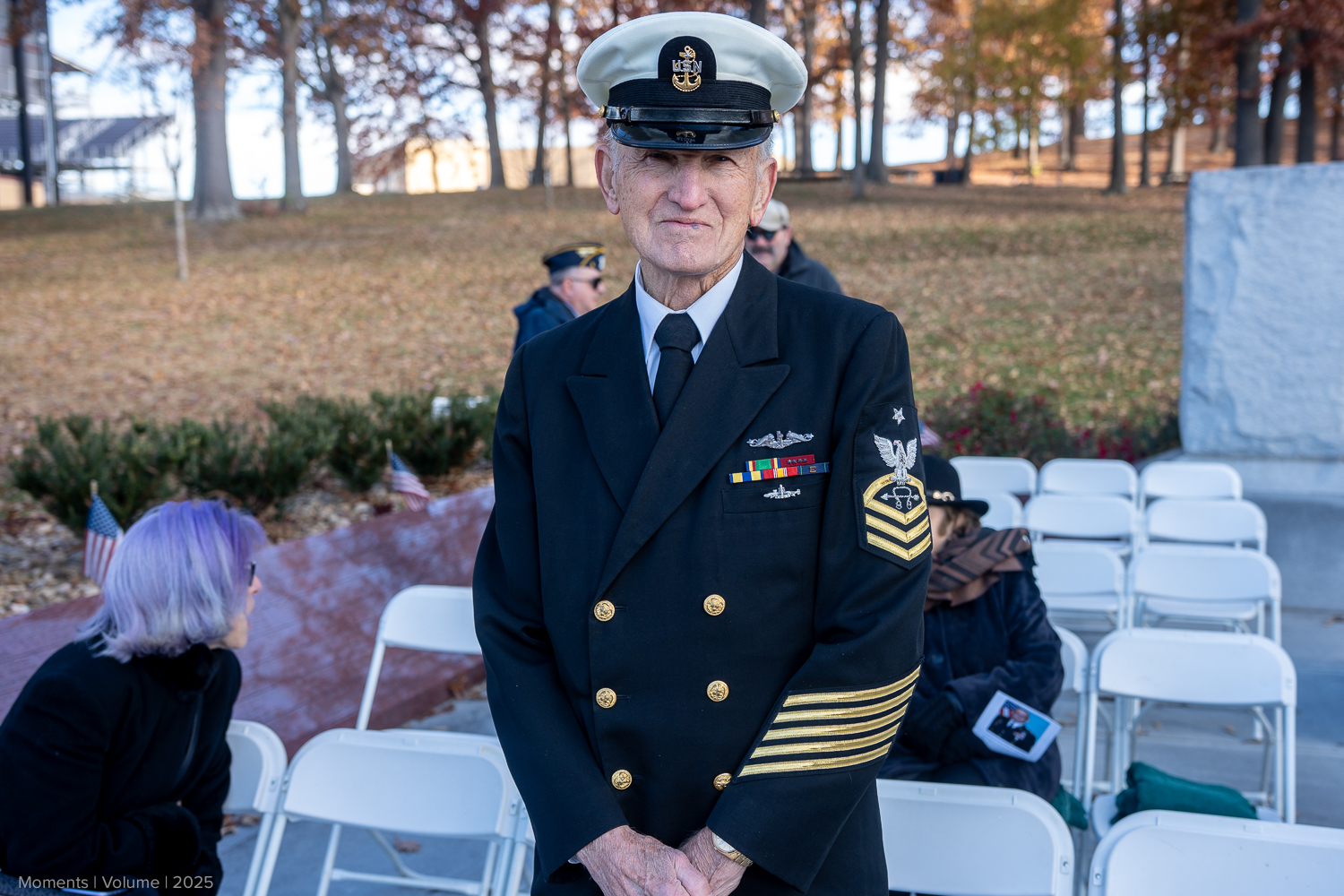
He stood tall, unmistakably so. An officer’s posture. Navy dress uniform. Submarine insignia. He looked exactly as a lifetime of service would suggest he should look—composed, disciplined, and striking in his stillness. I had to take his photo. I interrupted his conversation with Mayor Shull, introduced myself, and asked a few questions.
His name is Larie Hooper.
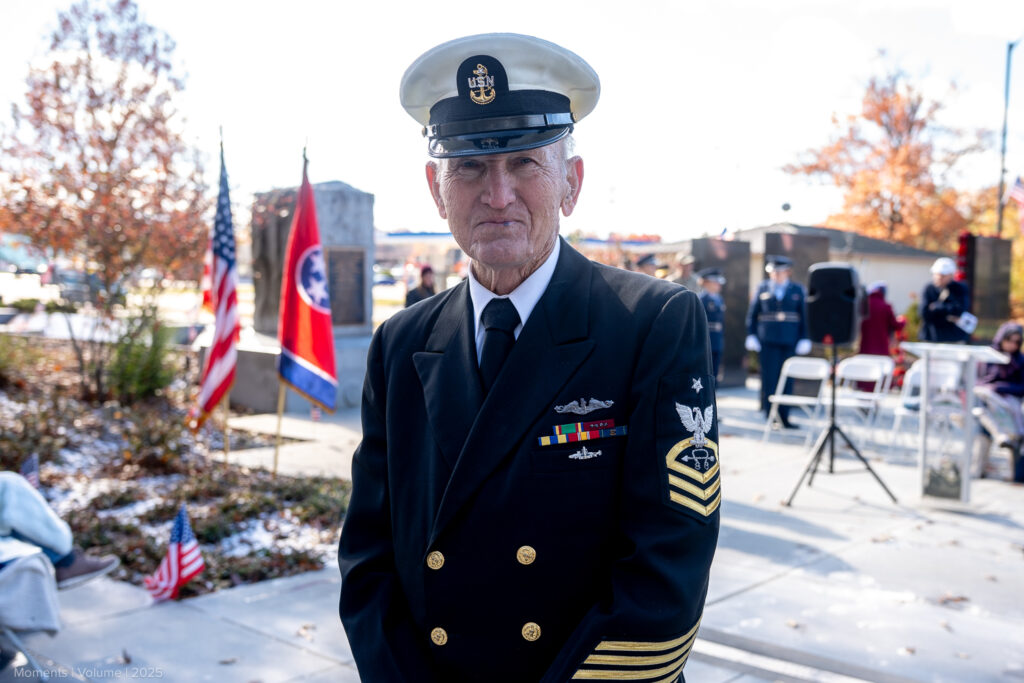
He served in the United States Navy for twenty years, from 1955 to 1975. Standing there in the same uniform he wore while still in service, it fit him as it always had—like something earned, not worn. He told me he was 89.
Larie served on six submarines. Four of them were nuclear. He was Chief of the Boat—a Senior Chief Petty Officer. That alone tells you plenty. There’s a certain gravity that comes with men who lived their lives underwater, quietly carrying the weight of deterrence and duty far from sight.
But what moved me most wasn’t his rank, his record, or even the uniform.
It was his eyes.
As stern and focused as he appeared that cold morning, they softened when he spoke of his wife. Joyce. They were married for sixty-six years. She passed away some years ago, and as he said her name, tears rose unannounced—icy, honest, and completely unguarded. In that moment, the uniform, the medals, the posture—all of it gave way to something deeper.
Together they raised a daughter, Shelley Hooper Allen, and have a grandson, Zachary.
I didn’t learn what first brought Larie to Kingsport, only that a neighbor had brought him to the ceremony that day. But what stays with me—what lingers long after Veterans Day—is the depth of love I saw in that man’s face. Sixty-six years is not luck. It’s work. It’s commitment. It’s endurance. And there is a quiet pride that comes from doing something hard, and doing it well.
Larie Hooper stood above the crowd that day in every sense of the word—not because of his uniform alone, but because of the life he lived within it, and beyond it.
I hope I meet him again. I hope to hear more of his stories. And next year, I hope to stand once more among new friends, familiar heroes, and the fading ranks of the Greatest Generation.
Another reason I love this place is simple: here in Northeast Tennessee, respect for our veterans isn’t loud. It’s steady. And on cold days like that one, it shows up anyway.
Honor Runs Deep For Our Veterans In This Place
By David Cate - Administrator
January 14, 2026
I love this place for a lot of reasons—some obvious, some quiet. But one of the strongest is the way this community honors its veterans. Not loudly. Not performatively. Just steadily. Even when it’s cold. Even when the crowd is small.
Veterans Day in Kingsport doesn’t need spectacle to matter. Sometimes it only needs a handful of people willing to stand outside, listen, remember, and bear witness.
This is one of those moments.
It was unusually cold on Veterans Day last year.
We’d had a long run of warm days, the kind that lull you into thinking winter might pass us by. It didn’t. Snow dusted the housetops on Monday, and by Tuesday morning—11 a.m., the eleventh day of the eleventh month—the air had turned sharp and honest. Winter had arrived without ceremony.
The turnout at the Kingsport Veterans Memorial was small. The cold saw to that. But the sky was clear, the sun bright, and there was something right about standing there anyway—bundled up with neighbors and friends, honoring those who had served, whether the crowd was large or not.
Sam Jones of Tri-Cities Military Affairs was there, as he always is. Sam volunteers his time every year to make this ceremony happen. A Vietnam veteran and lifelong advocate for his comrades, he’s steady and reliable—one of those people you come to expect, and trust, will always show up. As I shuffled through the brown leaves carpeting the ground, with a faint hint of Christmas riding the wind through the tall oaks, Sam introduced me to the day’s guest speaker, Command Sergeant Major Joe Winchester. He wore an Army hat that felt pulled from another era, something almost cavalry-like about it.
I’ve attended this ceremony enough times now that I find myself looking for familiar markers—quiet traditions that repeat year after year. The pastel blue uniforms of the Korean War veterans, usually seated in the front row. World War II veterans like Virgil Peters, now 99, who has attended faithfully for as long as he’s been able. Virgil wasn’t there this year. The cold, and his health, kept him indoors. Those absences stay with you. It’s the memories you collect that matter.
The Liberty Celebration Choir was smaller than usual, but their voices cut cleanly through the cold. Their accompanist played with mittens on, which made me smile. Not bad at all. Melissa Woods and Clark Parker sang the National Anthem, and the flag above the MIA banner snapped and clapped in time with the music as the wind threaded its way through the trees. Command Sergeant Major Winchester followed with his memorial address.
And still—despite the ceremony, the flags, the familiar faces—it was one man who stopped me cold.
He stood tall, unmistakably so. An officer’s posture. Navy dress uniform. Submarine insignia. He looked exactly as a lifetime of service would suggest he should look—composed, disciplined, and striking in his stillness. I had to take his photo. I interrupted his conversation with Mayor Shull, introduced myself, and asked a few questions.
His name is Larie Hooper.
He served in the United States Navy for twenty years, from 1955 to 1975. Standing there in the same uniform he wore while still in service, it fit him as it always had—like something earned, not worn. He told me he was 89.
Larie served on six submarines. Four of them were nuclear. He was Chief of the Boat—a Senior Chief Petty Officer. That alone tells you plenty. There’s a certain gravity that comes with men who lived their lives underwater, quietly carrying the weight of deterrence and duty far from sight.
But what moved me most wasn’t his rank, his record, or even the uniform.
It was his eyes.
As stern and focused as he appeared that cold morning, they softened when he spoke of his wife. Joyce. They were married for sixty-six years. She passed away some years ago, and as he said her name, tears rose unannounced—icy, honest, and completely unguarded. In that moment, the uniform, the medals, the posture—all of it gave way to something deeper.
Together they raised a daughter, Shelley Hooper Allen, and have a grandson, Zachary.
I didn’t learn what first brought Larie to Kingsport, only that a neighbor had brought him to the ceremony that day. But what stays with me—what lingers long after Veterans Day—is the depth of love I saw in that man’s face. Sixty-six years is not luck. It’s work. It’s commitment. It’s endurance. And there is a quiet pride that comes from doing something hard, and doing it well.
Larie Hooper stood above the crowd that day in every sense of the word—not because of his uniform alone, but because of the life he lived within it, and beyond it.
I hope I meet him again. I hope to hear more of his stories. And next year, I hope to stand once more among new friends, familiar heroes, and the fading ranks of the Greatest Generation.
Another reason I love this place is simple: here in Northeast Tennessee, respect for our veterans isn’t loud. It’s steady. And on cold days like that one, it shows up anyway.