
 Calendar
 I Love This Place
 Blogs
Blogs Venues
 Downtown
 Experiences
 Residents
 Shop
Shop Visitors


Several years ago, I was watching Ken Burns and Dayton Duncan’s PBS documentary, The National Parks: America’s Best Idea, when I saw a reference to John Cook.
I immediately texted my friend Lafe Cook, longtime director of the Dobyns-Bennett High School Band.
“Is that your dad?”
When Lafe answered yes, I was smitten, but I had no idea how much National Park Service history was contained in that simple answer.
Lafe later casually mentioned that he was the only member of his family who had not worked for the national parks.
The Cook family’s formal Park Service tradition began in 1924, when Lafe’s great-grandfather, John E. Cook, went to work at Grand Canyon. Four generations devoted their lives to preserving our national heritage with assignments spanning from coast to coast.
John Cook became a trusted leader. During the Carter administration, he was sent to help resolve serious conflicts involving the Alaska Lands Act, an especially contentious period of debate over federal land protection and access.
The assignment required more than technical knowledge. It called for someone who could listen to people who strongly disagree, understand local concerns, and seek common ground.
According to Lafe, his father handled the assignment so successfully that he was rewarded with the opportunity to choose his next post.
John chose the Great Smoky Mountains National Park.
That decision brought the Cook family to Gatlinburg—and brought Lafe to Tennessee.
Lafe chose a different profession, but the same family principles followed him to Kingsport.
Rather than managing a national park, he became responsible for another treasured public institution: the Dobyns-Bennett High School Band.
The word public is important.
National parks are public places. They belong to all of us.
Public education rests on the same promise.
Every child who walks through the door of a public school deserves the opportunity to discover his or her potential.
Lafe has honored that idea throughout his career.
He has taken public school students from Appalachia to the nation’s highest levels of competition. At the Grand National Championships, Dobyns-Bennett students compete against programs from affluent suburbs and specialized arts magnet schools.
The playing field is not always even.
Lafe has never taught them to view that as a limitation.
He makes them believe they belong among the finest programs in the country.
Then they prove him right.
Like a national park, a great public school program does not belong to the person temporarily placed in charge. It is inherited from those who built it, cared for during one period of leadership, and passed forward to those who follow.
Lafe has guided generations of students, protected a tradition nearly as old as Kingsport itself, and helped the Dobyns-Bennett Band remain one of our community’s most visible ambassadors.
His influence cannot be measured only in performances, awards, championships, or national appearances. It lives in young people who learned discipline, teamwork, responsibility, confidence, and the pursuit of excellence under his direction.
Perhaps the best explanation of the Cook family’s values, however, is not found in a résumé or job title.
It is found in one small artifact.
Lafe told me that, while visiting Point Barrow, Alaska, in his younger years, he picked up an arrowhead from an ancient Inuit archaeological site and slipped it into his pocket—even though his dad had specifically told him not to.
Years later, John noticed the ancient artifact in Lafe’s dorm room and asked where it had come from.
Lafe admitted to taking it from the shore.
His father made him send it back—with a letter of apology.
It was only an arrowhead. No one would have noticed it was missing, and its removal did not visibly alter the landscape.
But John understood that the principle was larger than a single arrowhead.
It was not ours to take simply because no one was watching.
That is stewardship.
It is doing the right thing when the object seems insignificant, the consequences appear negligible, and no one else would ever know.
The artifact itself was returned, but the lesson created ripples. It shaped the way Lafe understood responsibility, service, and the care of things entrusted to him. Through the thousands of young people he taught and inspired, those ripples have continued to spread.
A few years ago, John moved to Kingsport to be closer to Lafe and his family. Our community is fortunate to have become home to someone whose life and work reached from the ancient cultural landscapes of the Southwest to Alaska and the Great Smoky Mountains National Park.
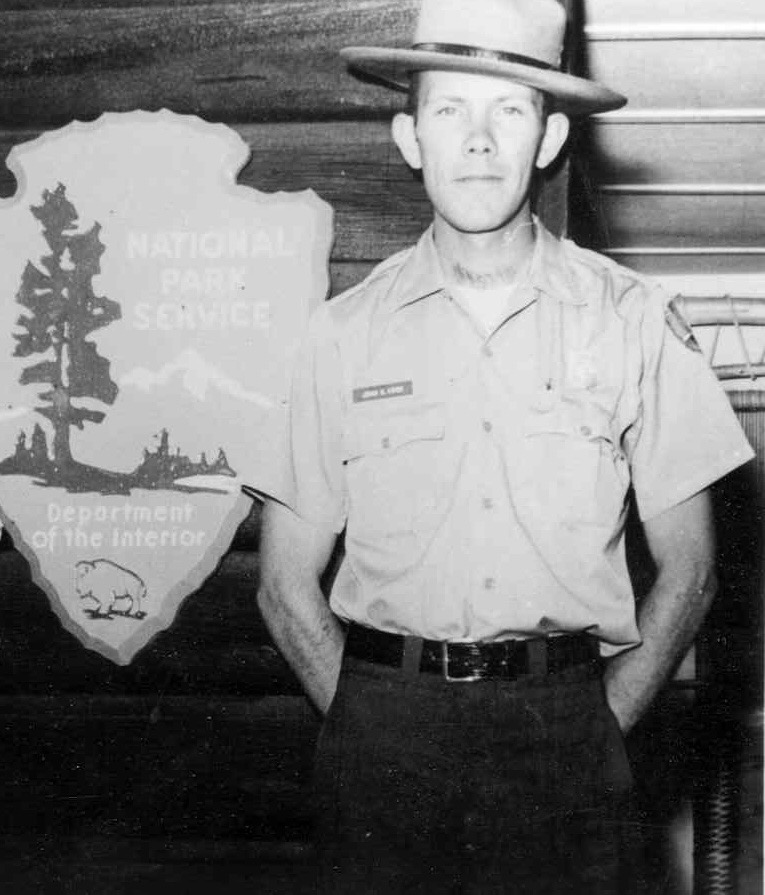
John Cook passed on July 3, 2026, on the eve of America’s 250th Birthday.